
Blog
EU Regulatory Insights
Regulatory updates, compliance guides, and EU market entry insights for supplement brands, cosmetic companies, and North American exporters.
The COA Isn't Proof: What Third-Party Testing Reveals in European Botanical Supply Chains
A supplier COA documents what was tested — not what's in the product. Here's what independent testing consistently finds in European botanical supply chains.
Why Your EU Food Supplement Dossier Won't Get You a Canadian NPN — And What Actually Will
European supplement brands that assume their EU notification dossier transfers to Health Canada NPN approval consistently hit the same evidence gaps. Here is exactly where they fall short and how to fix it.
The PAO Symbol Is Not a Default: EU Cosmetics Stability Testing Under Regulation (EC) No 1223/2009
EU Regulation 1223/2009 requires defensible stability data behind every PAO claim. Learn what your PIF must include and what DGCCRF inspectors actually check.
EU GMP Annex 7 for Herbal Medicinal Products: A Practical Compliance Checklist
EU GMP Annex 7 sets specific botanical testing and documentation requirements that go beyond standard pharmaceutical GMP. Here's what inspectors actually look for.
MoCRA Compliance for European Cosmetic Exporters: The FDA Requirements EU Brands Keep Getting Wrong
MoCRA rewrote US cosmetics law in 2022 — and EU brands are still making the same five mistakes. Here's what to fix before your products reach FDA scrutiny.
USP Botanical Identity Testing Under DSHEA: Why European Labs Almost Always Fall Short
European herbal brands exporting to the US find their EU lab's testing won't satisfy FDA under DSHEA. Here's what USP botanical identity testing actually requires.
EU Cosmetics Animal Testing Ban vs. China Market Entry: The Compliance Dilemma European Brands Aren't Prepared For
EU Regulation 1223/2009 bans animal-tested cosmetics from European shelves. China still requires animal data for key product categories. Here's how to navigate both legally.
MoCRA Serious Adverse Event Reporting: The FDA Obligation European Cosmetics Exporters Are Still Missing
MoCRA requires responsible persons to report serious adverse events to FDA within 15 business days. What European cosmetics exporters need in place now.
Mycotoxin Contamination in Herbal Ingredients: What EU Regulations Actually Require
EU Regulation 1881/2006 sets strict aflatoxin and ochratoxin limits for herbal raw materials — and supplier CoAs are not a compliance defence. Here's what European brands must do.
EU Cosmetics Digital Labelling: What the QR Code Amendment to Regulation 1223/2009 Actually Allows
QR codes can't replace mandatory EU cosmetics label text—yet. Here's what Regulation 1223/2009 Article 19 requires and where digital labelling rules stand in 2026.
What Indie Beauty Brands Get Wrong About ISO 22716 GMP: Five Shortcuts That Always Backfire
ISO 22716 GMP applies to every EU cosmetics brand regardless of size. Here are the five shortcuts indie manufacturers take that always backfire.
Pesticide Residues in EU Herbal Supplements: Why EC 396/2005 Compliance Doesn't Protect You at the US or Canadian Border
EU herbal brands exporting to the US or Canada need more than EC 396/2005 compliance. Here's how FDA and Health Canada pesticide frameworks differ from EU MRL standards.
Supplier Qualification for EU Cosmetics Brands: The REACH Declarations, COAs, and Audit Records Your PIF Actually Needs
EU cosmetics brands often discover supplier documentation gaps during audits. Here's the REACH declarations, COAs, and audit records your PIF requires.
Endocrine Disrupting Chemicals in EU Cosmetics: What Regulation 1223/2009 Requires in 2026
The EU is tightening EDC restrictions in cosmetics under Regulation 1223/2009. Learn which UV filters and preservatives face SCCS scrutiny in 2026.
EU Sunscreen Actives and the FDA's OTC Drug Gate: What European Brands Must Know Before Exporting to the US
European sunscreens built on Tinosorb or Mexoryl can't enter the US without reformulation. Here's what FDA's OTC drug classification means for your brand.
COA Red Flags: How to Spot Unreliable Testing Data from Herbal Ingredient Suppliers
Over 65% of herbal ingredient COAs submitted to our network failed independent verification. EU brands face direct regulatory exposure under Regulation 1223/2009.
REACH Certificate of Conformity: What Cosmetics Brands Must Demand from Ingredient Suppliers
Most cosmetics brands hold REACH CoC documents that won't survive a regulatory audit. Learn exactly what a valid REACH certificate must contain — and five red flags to reject.
Why 'Argania Spinosa Kernel Oil' on Your CoA Doesn't Mean What You Think
Argan oil adulteration affects up to 25% of EU cosmetic supplies. Learn how to verify authenticity and protect your PIF under EU Cosmetics Regulation 1223/2009.
REACH Regulation Compliance and Microplastics: What Every EU Cosmetics Brand Needs in Their PIF Right Now
REACH Entry 78 restricts intentionally added microplastics across cosmetics categories. Here's what your PIF must document and when the deadlines hit.
PFAS in EU Cosmetics: What the Universal REACH Restriction Means for Your Formulations
The EU's universal PFAS restriction under REACH is advancing. European cosmetics brands that haven't audited their formulations are already running out of time.
EU Food Supplement Maximum Levels: The Harmonisation Gap That's Tripping Up Multi-Market Brands
The EU Food Supplements Directive 2002/46/EC never delivered harmonised maximum vitamin and mineral levels. Here's what that costs European brands operating across borders.
EU General Product Safety Regulation: What Cosmetics Brands Compliant With 1223/2009 Still Need to Fix
GPSR (EU 2023/988) applies to cosmetics even with a 1223/2009-compliant PIF. Here are the five obligations your safety file almost certainly doesn't cover.
EU Microplastics Ban in Cosmetics: The Transition Deadlines Most Formulators Are Getting Wrong
EU Regulation 2023/2055 restricts microplastics in cosmetics with staggered deadlines from 2027 to 2035. Understand which categories are in scope and what REACH compliance requires now.
Sunscreen in Europe Is a Cosmetic — In the US, It's a Drug: What European Exporters Must Know
European brands often discover too late that their EU-compliant sunscreen is an unapproved drug in the US. Here's the FDA framework every exporter must understand.
When Your Cosmetic Becomes a Medicinal Product: The Borderline Classification Risk Under EU Regulation 1223/2009
High-concentration actives can trigger ANSM reclassification of your cosmetic as a medicinal product. What's at stake — and how to assess the risk before EU market entry.
When Your EU Cosmetic Becomes an FDA Drug: What European Exporters Must Know
If your EU-approved cosmetic makes the wrong claim, FDA reclassifies it as a drug. Here's what European exporters must know before entering the US market.
Water Activity Testing in Cosmetics: The Microbial Safety Gap Hiding in Your EU Product Information File
EU Cosmetics Regulation 1223/2009 demands robust microbiological safety justification. Water activity (Aw) testing is the metric most brands overlook — and regulators are noticing.
The EU Cosmetic Product Safety Report: What Regulation (EC) No 1223/2009 Requires in Part A and Part B
A technical breakdown of the CPSR under Regulation EC No 1223/2009 — what Part A must document and what Part B must conclude for EU market compliance.
EU Sunscreen Ingredients That FDA Has Not Approved: The UV Filter Gap European Brands Must Navigate
EU Regulation 1223/2009 approves ~27 UV filters; FDA considers only 2 GRASE. Here's what that compliance gap means for European brands targeting the US market.
Why European Regulators Are Scrutinising Ashwagandha — and What Supplement Brands Must Test Before Going to Market
ANSES flagged 27 adverse event reports linked to ashwagandha; Denmark restricted high-dose products. What EU supplement brands must test before launch.
EU Fragrance Allergen Labeling: The August 2026 Deadline That Changes What Goes on Your Cosmetics Label
With 11 days to August 2026, expanded fragrance allergen labeling under EU Cosmetics Regulation 1223/2009 applies to all new products. Here's your compliance checklist.
REACH Compliance for Cosmetics Manufacturers: What SVHCs Mean for Your Formulations
REACH and EU Regulation 1223/2009 impose overlapping but distinct duties on cosmetics brands. Here's what SVHCs, the Candidate List, and the SCIP database actually require.
In Vitro Safety Testing for EU Cosmetics: Which Methods SCCS Accepts Under Regulation 1223/2009
EU Regulation EC 1223/2009 bans animal testing. Here's which in vitro methods SCCS accepts for your safety report — and where brands still face data gaps.
ISO 22716 GMP vs FDA Cosmetics Requirements: The Gap Analysis European Exporters Need
European cosmetics manufacturers certified to ISO 22716 face critical gaps under FDA MoCRA. Here's the gap analysis you need before exporting to the US.
UK vs EU Cosmetics Regulation After Brexit: A Practical Guide for Brands Entering Both Markets
UK and EU cosmetics regulation have diverged since Brexit. A practical guide to Responsible Persons, notifications, and REACH for brands entering both markets.
Botanical Adulteration in EU Herbal Supplements: Why DNA Barcoding Is Overturning Traditional Identity Testing
68% of herbal products in a landmark barcoding study contained undisclosed species. Here's why DNA testing is changing botanical identity verification for EU supplement brands.
EU UV Filter Approvals: Why Sunscreen Brands Are Still Waiting — and What Annex VI Compliance Actually Requires in 2026
EU Annex VI permits fewer than 30 UV filters, and adding one takes years. Here's how the SCCS approval process works and what sunscreen brands must get right under EC No 1223/2009.
What 'Natural', 'Anti-Ageing', and 'Clinically Proven' Must Actually Prove Under EU Cosmetics Law
Regulation 655/2013 sets six strict criteria for EU cosmetic claims. What 'natural', 'anti-ageing', and 'clinically proven' must actually prove — and where brands get caught.
CMR Substances in EU Cosmetics: How CLP Reclassifications Create Overnight Formulation Bans
When a substance is reclassified as CMR under EU CLP Regulation, it can instantly become prohibited in cosmetics under Article 15 of Regulation 1223/2009. Here's what brands must monitor.
Cosmetics Stability Testing Under EU Regulation 1223/2009: What Your Product Information File Actually Needs
Stability testing is a legal requirement under EU Regulation 1223/2009. Here's what your PIF must include to support a compliant cosmetics safety assessment.
EU Sunscreens Are OTC Drugs in the USA: The FDA Compliance Gap European Exporters Miss
EU sunscreens are classified as OTC drugs in the USA — not cosmetics. Learn the formulation, labeling, GMP, and registration gaps European exporters must close before shipping.
Nitrosamines in EU Cosmetics: The In-Formulation Risk That Every CPSR Must Address Under EC Regulation 1223/2009
Nitrosamines can form inside your finished cosmetic even when every ingredient is individually compliant. Here's what EC Regulation 1223/2009 and the SCCS require you to assess.
Heavy Metals in Herbal Supplements: The EU Testing Limits European Brands Are Missing
EU Regulation 2023/915 sets binding limits on lead, cadmium, mercury and arsenic in botanical supplements. Most European brands test too late against the wrong spec.
Collagen Supplement Testing in Europe: Why Market Growth Is Outpacing Quality Controls
Europe's collagen supplement market is booming — but testing standards are lagging badly. Here's what brand owners must know about identity testing, adulteration, and EU compliance.
Cosmetics Vigilance Reporting in France: What Article 23 of Regulation 1223/2009 Actually Demands
Article 23 of Regulation 1223/2009 requires SUE reporting within 20 days. What France's ANSM expects from cosmetic brands — and where most fall short.
CPNP Notification Errors That Delay EU Cosmetics Launches — What Regulation (EC) No 1223/2009 Actually Requires
Five CPNP notification mistakes that delay EU cosmetics launches under Regulation EC 1223/2009 — and how to catch them before market entry.
EU Annex IV vs FDA Color Additives: What European Cosmetic Brands Must Know Before Exporting to the US
EU Annex IV colorants under Regulation (EC) No 1223/2009 don't map directly to FDA-approved color additives. Here's the compliance gap that catches European brands off guard.
SPF Claims Under EU Regulation 1223/2009: What ISO 24444 Testing Demands Before You Print a Number
EU sun protection products require ISO 24444:2019-compliant SPF data and UVA testing under Regulation 1223/2009. Here's exactly what your PIF must contain.
ISO 11930 Preservative Efficacy Testing: The Criterion A vs. Criterion B Mistake Most EU Cosmetic Brands Make
Most EU cosmetic brands misclassify their products under ISO 11930, defaulting to Criterion B when Criterion A applies. Here's what the standard actually requires — and what it costs when you get it wrong.
Regulation (EU) 2025/40 and Your Cosmetics Range: What the PPWR Actually Requires — and When
Regulation (EU) 2025/40 is already in force. Here's what PPWR's packaging recyclability and recycled content rules mean for EU cosmetics brands before 2030.
Heavy Metals in EU Cosmetics: What Regulation 1223/2009 Actually Requires (and What It Doesn't)
EU Regulation 1223/2009 bans many heavy metal compounds but sets no contaminant limits. Here's what your safety assessor actually needs for a compliant PIF.
What EU Regulation 655/2013 Requires Before You Print 'Clinically Proven' on Your Cosmetic Label
EU Regulation 655/2013 sets six mandatory criteria for every cosmetic claim. Here's what adequate evidence actually looks like — and where DGCCRF inspections typically begin.
Heavy Metals in Herbal Supplements: Why EU Concentration Limits Don't Guarantee Health Canada Compliance
European herbal brands often assume Ph.Eur. heavy metal limits satisfy Health Canada's NPN requirements. Here's why the daily intake framework tells a different story.
CBD in EU Cosmetics: What Regulation (EC) No 1223/2009 Actually Says — And What Most Brands Get Wrong
Cannabidiol occupies a regulatory grey zone under EU Cosmetics Regulation 1223/2009. Here's what your CPSR must cover, why THC in Annex II matters, and how national enforcement varies.
EU Sunscreen Regulation vs FDA OTC Monograph: Why European SPF Formulations Need a US-Specific Rethink
EU sunscreens are cosmetics under Regulation 1223/2009; US sunscreens are OTC drugs. Here's what this means for European brands — and which UV filters can't cross the Atlantic.
What a REACH CoC Actually Tells You About Your Cosmetic Ingredients — and the Gaps That Matter
A REACH CoC confirms registration, not cosmetic safety. Discover what EU cosmetics brands must verify beyond the certificate under Regulation 1223/2009.
REACH Regulation Compliance for Cosmetic Ingredients: How to Audit Your Supply Chain for SVHC Restrictions
Most European cosmetic brands have a REACH gap in their PIF. Here's how SVHC restrictions under EC No 1907/2006 intersect with Regulation 1223/2009.
Risk-Based Supplier Tiering Under ISO 22716: The Qualification Framework European Cosmetic Brands Are Missing
ISO 22716 requires supplier qualification but leaves the method open. Here's how risk-based tiering works in practice — and where EU cosmetic brands fall short.
DNA Barcoding vs. HPTLC: Choosing the Right Botanical Identity Method for EU Supplement Exports
European supplement manufacturers face different botanical identity testing expectations in the EU, US, and Canada. How to choose between HPTLC and DNA barcoding for each market.
Preservative-Free Doesn't Mean Risk-Free: What EU Cosmetics Regulation 1223/2009 Requires From Clean Beauty Brands
What 'preservative-free' really means under EU Cosmetics Regulation 1223/2009 — and the microbiological compliance gaps clean beauty brands are missing.
The EU Responsible Person Under Regulation (EC) No 1223/2009: Who Is Legally Liable When Your Cosmetic Goes to Market?
Under EU Cosmetics Regulation 1223/2009, every product needs a Responsible Person. Learn who qualifies, what obligations they carry, and where European brands go wrong.
Why European Supplement Brands Get Their Health Canada NPN Application Rejected — And What to Fix Before You Apply
European supplement brands face high NPN rejection rates. Discover why Health Canada NHPD dossiers fail and how to fix yours before you submit.
FDA Import Detentions for EU Cosmetics: How Import Alerts Work and How to Protect Your Shipments
FDA can detain EU cosmetics at the US border without physical examination. Learn how Import Alerts work, which products face the highest risk, and how to comply.
Endocrine Disruptors in EU Cosmetics: What's Coming Under Regulation 1223/2009 and How to Stay Ahead
The EU is accelerating restrictions on endocrine-disrupting substances in cosmetics. Here's what Regulation 1223/2009 changes mean for European formulators in 2026.
Pesticide Residue Screening in Botanical Raw Materials: What European Supplement Brands Consistently Get Wrong
EU Regulation (EC) No 396/2005 tracks 500+ pesticides. Most botanical CoAs cover fewer than 10. Close the screening gap before your next regulatory inspection.
ALCOA+ and FDA Data Integrity: Why European Exporters Are Catching Warning Letters
Data integrity deficiencies now dominate FDA warning letters to foreign manufacturers. Here's what ALCOA+ demands and where EU lab practice consistently falls short.
REACH Compliance for Cosmetic Ingredients: The Dual Obligation European Brands Often Miss
Complying with EU Cosmetics Regulation 1223/2009 doesn't satisfy your REACH compliance obligations. Here's where the gap is and how to close it.
DGCCRF Cosmetics Enforcement: What France's Market Surveillance Findings Mean for EU Brands in 2025
France's DGCCRF is one of the EU's most active cosmetics regulators. See what their enforcement findings mean for your brand under Regulation 1223/2009.
REACH CoC for Cosmetics Ingredients: What the Document Must Contain and How to Spot a Deficient One
Your supplier's REACH CoC may look official and say very little. Here's exactly what it must contain to genuinely protect your EU cosmetics brand.
MoCRA Registration for European Cosmetics Brands: What the FDA's Modernization Act Requires Before You Ship to the US
MoCRA overhauled US cosmetics law in 2022. European brands now face FDA facility registration, product listing, a US agent requirement, and a 15-day adverse event clock.
Why Your EU GMP Certificate Won't Automatically Earn a Health Canada NHP Site Licence
Health Canada requires both a Site Licence and an NPN before selling NHPs in Canada. Here's why EU GMP alone won't get you there — and what will.
EU Microplastics Restriction Under REACH: What Cosmetic Brands Must Do Before the 2027 Deadline
Commission Regulation (EU) 2023/2055 restricts intentionally added microplastics in cosmetics. Here's what European brands must do before the 2027 phase-out.
CBD in EU Cosmetics vs. Novel Food: The Regulatory Line European Brands Keep Crossing
CBD is permitted in EU cosmetics, but product classification, THC testing, and CPSR documentation must be airtight. We explain the regulatory framework.
Microplastics in EU Cosmetics: The REACH Restriction Timeline Most Brands Are Already Behind On
Commission Regulation (EU) 2023/2055 is already phasing out microplastics in EU cosmetics. Here's the timeline, definition grey areas, and what your reformulation plan needs.
REACH CoC Explained: How European Cosmetics Brands Should Evaluate Supplier Declarations
Learn what a valid REACH compliance declaration must contain, why most fall short, and how to build a supplier qualification process that satisfies EU Regulation 1223/2009.
UK Cosmetics Compliance After Brexit: Why EU Approval No Longer Travels
EU Regulation 1223/2009 compliance doesn't carry over to the UK market. Here's what European cosmetics brands need in 2026 — from UK Responsible Persons to SCPN registration.
The EU Digital Product Passport Is Coming for Cosmetics: What Manufacturers Need to Prepare for Now
EU Regulation 2024/1781 is live and cosmetics will follow. European manufacturers have a narrow window to close the supply chain data gaps the DPP will expose.
The MoCRA Compliance Calendar Every European Cosmetics Exporter Should Track in 2026
MoCRA's annual renewal cycles, serious adverse event reporting, and the upcoming FDA GMP rule explained for European cosmetics brands targeting the US market.
Post-Brexit EU Cosmetics Compliance: What UK Brands Must Resolve Before Selling in France, Germany, or Italy
Six years after Brexit, UK cosmetics brands still hit the same compliance walls entering the EU market. Here's what Regulation 1223/2009 actually requires.
EU Green Claims for Cosmetics: What 'Natural,' 'Eco-Friendly,' and 'Biodegradable' Now Legally Require
Directive (EU) 2024/825 transposition passed in March 2026. European cosmetics brands using 'natural,' 'eco,' or 'carbon neutral' claims need documented evidence files — or face DGCCRF enforcement.
Heavy Metals in EU Cosmetics and Supplements: What Regulation 1223/2009 and REACH Actually Require
EU cosmetics regulation 1223/2009 requires heavy metal safety data — here's what manufacturers must actually test under REACH and EFSA guidelines to protect their dossier.
Testing Herbal Supplements to USP and AOAC Standards: The Gap European Brands Discover Too Late
European herbal brands targeting the US or Canada face a hidden testing gap: most EU labs don't run USP or AOAC methods. Here's why it matters.
EU Cosmetics Stability Testing: The PAO Evidence Gap That Puts Brands at Risk
Most EU cosmetics brands print a PAO symbol without data to support it. Here's what Regulation 1223/2009 actually requires—and where brands fall short.
CPNP Notification Under EU Regulation 1223/2009: Six Errors That Block Your Market Entry
Discover the six most common CPNP notification errors under EU Regulation (EC) No 1223/2009 — and the practical fixes that prevent market surveillance from finding them first.
EU and UK Cosmetics Compliance in 2026: Where the Two Regimes Have Actually Split
Post-Brexit divergence between EU Regulation 1223/2009 and UK cosmetics law is real and growing. Here's where the rules differ and what it costs brands.
Fragrance Allergen Labelling Under EU Cosmetic Regulation 1223/2009: What Regulation (EU) 2019/1966 Actually Requires
EU Cosmetic Regulation 1223/2009 now requires declaration of 82+ fragrance allergens. Here's what changed with 2019/1966 — and where brands still slip up.
EU Microplastics Restriction in Cosmetics: The October 2025 Deadline Has Passed — Are You Compliant?
Commission Regulation (EU) 2023/2055 set the first REACH compliance deadline for cosmetic microplastics in October 2025. Here's what brands must do next.
Turmeric Adulteration in European Supply Chains: The Lead Chromate Risk Every Botanical Brand Must Test For
Lead chromate adulteration in turmeric is an underappreciated compliance risk for European supplement and cosmetics brands — and your supplier COA won't catch it.
EU Fragrance Allergen Labeling: What the 2023 Annex III Update Means for Your Cosmetics Range
Commission Regulation (EU) 2023/1545 expanded the EU fragrance allergen list from 26 to 80 substances. Here's how to audit your formulas and PIFs for compliance.
France's Cosmetovigilance Rules: What EU Responsible Persons Must Report — and When
Article 23 of EU Regulation 1223/2009 requires serious undesirable effect reporting to ANSM. Here's what's mandatory, the exact timelines, and how your ISO 22716 system must support it.
Cosmetic Stability Testing Under ISO 22716: The Protocol Gaps EU Brands Discover Too Late
ISO 22716 GMP requires documented stability data for every EU cosmetic product. Here's what Regulation (EC) No 1223/2009 actually demands — and the three tests most brands miss.
Your EU Sunscreen Is an OTC Drug in the USA: The Compliance Gap European Brands Can't Afford to Miss
EU sunscreens are cosmetics under Regulation 1223/2009. In the USA, they're FDA OTC drugs — UV filter restrictions, Drug Facts labeling, and 21 CFR Part 211 cGMP all apply.
Certificate of Analysis Red Flags: What European Supplement Brands Must Know Before Trusting a Supplier's Test Data
A supplier's CoA is only as good as the lab behind it. Here are 7 red flags European supplement brands must check before trusting any incoming test data.
The EU Microplastics Ban in Cosmetics: What Manufacturers Must Do Before October 2027
The REACH restriction on synthetic polymer microparticles in rinse-off cosmetics takes effect October 2027. Here's what EU manufacturers must do now.
Regulation 1223/2009's Expanded Fragrance Allergen List: 56 New Substances and a Deadline Three Months Away
Commission Regulation (EU) 2023/1545 added 56 fragrance allergens to Annex III of Regulation (EC) No 1223/2009. The August 2026 deadline is close. Here's your action plan.
Cosmetovigilance in France: Your SUE Reporting Obligations Under EC Regulation 1223/2009
What EC Regulation 1223/2009 requires for cosmetovigilance in France: SUE definitions, ANSM notification rules, distributor obligations, and PIF updates.
California's Toxic-Free Cosmetics Act: Why EU-Compliant Formulas Can Still Fail at the US Border
California's AB 2762 bans 24 chemical groups that EU Regulation 1223/2009 may still permit. Here's what European cosmetics brands must audit before shipping to the US.
Botanical Adulteration in EU Cosmetics Ingredients: Why Your Supplier's CoA Is Not Identity Verification
Botanical adulteration rates exceed 30% in some supply chains. EU Regulation 1223/2009 doesn't mandate identity test methods — here's what actually works.
Selling Cosmetics in Canada: The Health Canada Compliance Gaps Most European Brands Don't See Coming
European cosmetics brands entering Canada face Health Canada rules that differ significantly from EU 1223/2009 and FDA. Here's what to verify before your first sale.
Why Clean Beauty Formulas Are Failing EU Preservation Tests — And What to Do About It
EU cosmetic brands reformulating without traditional preservatives face ISO 11930 failures that block CPSR sign-off. Here's what goes wrong and how to fix it.
When Does a Cosmetic Become a Drug? How ANSM Classifies Active-Ingredient Products in France
ANSM classifies cosmetics with pharmacologically active ingredients as medicinal products in France. Here's what EC 1223/2009 doesn't protect you from.
Mycotoxins in Herbal Ingredients: EU Limits Under Regulation 2023/915 and What Your Export Markets Demand
EU Regulation 2023/915 sets strict mycotoxin limits for herbal ingredients. Most EU manufacturers aren't testing to the right standard — here's what's required.
ISO 22716 Audit Checklist: Where European Cosmetics Manufacturers Most Often Fall Short
A practical ISO 22716 GMP audit checklist for EU cosmetics manufacturers — the 5 most cited non-conformances and how to fix them before your next inspection.
After MoCRA: The FDA Compliance Gaps European Cosmetics Exporters Cannot Afford to Miss
EU Regulation 1223/2009 compliance doesn't transfer directly to the US market. Here's what MoCRA demands from European cosmetics brands selling in America.
EU Health Claims Under Regulation (EC) No 1924/2006: Why Most Supplement Brands Are Getting Their Labels Wrong
Navigate EU health claims under Regulation 1924/2006 — Article 13 categories, exact wording requirements, and DGCCRF enforcement risks for supplement brands.
REACH Only Representative: The Compliance Role Non-EU Exporters Cannot Afford to Overlook
Exporting chemicals to the EU? Learn how REACH's Only Representative under Article 8 protects your compliance — and what happens when you get it wrong.
What a REACH Certificate of Conformance Should Actually Say (Most Don't)
Most REACH certificates of conformance prove very little. Learn what a valid REACH CoC must address under EU Regulation (EC) No 1907/2006.
Your EU Cosmetics Product Information File: What Regulation (EC) No 1223/2009 Actually Requires
Everything in your EU cosmetics PIF under Regulation 1223/2009 — CPSR requirements, retention rules, GMP statements, and the gaps that fail inspections.
EC Regulation 1223/2009 Compliance: The Safety Assessment Gaps That Block EU Market Entry
Four critical EC Regulation 1223/2009 compliance gaps that consistently block EU cosmetic market entry — and how to address them before CPNP submission.
REACH Declarations of Conformity: What They Must Contain and When You Actually Need One
REACH declarations of conformity have no legal template — but get them wrong and your EU supply chain stalls. Here's what every valid declaration must cover.
REACH SVHC Compliance for Cosmetic Brands: What Your Suppliers Aren't Telling You
EU REACH regulation requires cosmetic brands to track SVHC substances across their supply chain. Here's what the Candidate List means for your formulations.
EU Cosmetic Claims Regulation 655/2013: What Your Marketing Team Is Probably Getting Wrong
EU Regulation 655/2013 sets 6 binding criteria for every cosmetic claim. Here's where brands fail on substantiation — and what DGCCRF looks for first.
EU Cosmetics Claims Regulation: What You Can (and Cannot) Say on Your Labels Under EC 1223/2009
Under EC 1223/2009 and EU 655/2013, cosmetic claims must meet six criteria. Here's what DGCCRF inspectors check — and how to build a defensible claims dossier.
Nanomaterials in EU Cosmetics: The Article 16 Pre-Market Obligation Non-EU Brands Miss
Article 16 of Regulation (EC) No 1223/2009 demands a 6-month nanomaterial pre-notification separate from standard CPNP filing. Here's what your formulations actually require.
The EU Responsible Person Under Regulation EC No 1223/2009: What Non-EU Cosmetic Brands Must Understand Before Launch
Regulation EC No 1223/2009 requires every EU cosmetic product to have a designated Responsible Person. Here's what the PIF, CPSR, and CPNP obligations actually demand.
Cosmétovigilance in France: What Your Brand Must Report — and When
France's ANSM enforces strict cosmétovigilance reporting for cosmetic brands. Learn exactly which adverse effects trigger Article 23 notification and how to comply.
DGCCRF Cosmetics Enforcement in France: What the Latest Inspection Trends Mean for Your Brand
France's DGCCRF runs targeted cosmetic inspection campaigns with 30%+ non-conformity rates. Here's what EU Regulation 1223/2009 compliance actually demands.
Selling Food Supplements in France: How the DGCCRF Télédéclaration Process Actually Works
France requires pre-market notification for every food supplement sold there. Here's exactly how the DGCCRF télédéclaration works — and where foreign brands go wrong.
The EU Animal Testing Ban in Cosmetics: What Article 18 Actually Says — and Where Brands Still Get It Wrong
The EU animal testing ban under Regulation EC 1223/2009 goes deeper than most brands realise. Here's what Article 18 covers, where REACH creates gaps, and how to navigate the China dilemma.
Cosmetics Vigilance Reporting in France: What the ANSM Expects from Responsible Persons
France's cosmetovigilance system predates EU Regulation 1223/2009. Learn what Article 23 SUE reporting requires in practice and how to meet ANSM's expectations.
Nanomaterials in EU Cosmetics: The Article 16 Notification Requirement Most Brands Get Wrong
EU Regulation 1223/2009 Article 16 requires a 6-month pre-market notification for nanomaterial cosmetics. Here's what your PIF and labelling must show.
Selling Cosmetics in France: What DGCCRF Inspections Reveal About EU Compliance Gaps
DGCCRF market surveillance for cosmetics goes beyond label checks. Learn what your brand must prepare before entering France under EU Regulation 1223/2009.
REACH Regulation SVHC: A Practical Guide for Cosmetic Brands Entering the EU Market
How to navigate REACH SVHC candidate list obligations for cosmetic products and packaging — covering Article 33, Annex XIV, and what a REACH CoC file actually requires.
France's Positive List for Botanical Ingredients: What Food Supplement Brands Must Verify Before Market Entry
France's positive list restricts botanical ingredients in food supplements. Learn what the arrêté du 24 juin 2014 requires before DGCCRF notification.
REACH Restrictions on Cosmetic Fragrances and Preservatives: Your EU Compliance Checklist for 2026
REACH restrictions directly affect fragrance and preservative ingredients in EU cosmetics. Here's the practical compliance checklist your team needs for 2026.
REACH Safety Data Sheet Requirements: What EU Suppliers and Importers Must Get Right
A practical guide to REACH SDS compliance under EU Regulation 2020/878 — 16 mandatory sections, UFI codes, SVHC disclosure, and the gaps that trigger enforcement action.
PFAS in EU Cosmetics: What Brands Must Know About the Incoming Regulation 1223/2009 Restrictions
The EU's universal PFAS restriction under REACH will reshape cosmetics compliance. Here's what Regulation 1223/2009 already covers and how to prepare for what's next.
REACH Certificate of Conformity vs. REACH Declaration: What EU Importers Actually Need
REACH CoC and REACH declarations are not the same thing — and neither substitutes for your legal obligations as an EU importer. Here's what actually matters.
REACH SVHC Compliance for Cosmetic Brands: What the Growing Candidate List Means for Your EU Formulations
With over 240 substances on the SVHC candidate list, REACH regulation compliance is reshaping EU cosmetic formulation. Here's what brands must do now.
Cosmetic Product Safety Report (CPSR): What It Is and How to Get One
A CPSR is mandatory for every cosmetic sold in the EU. This guide explains what it contains, who can write it, how long it takes, and what it costs — with a clear checklist for brands.
CPNP Notification: How to Register Your Cosmetic Product in the EU
Every cosmetic sold in the EU must be notified through the CPNP before market placement. This guide explains who submits it, what information is required, how to access the portal, and common mistakes to avoid.
EU Cosmetics Regulation 1223/2009: Complete Guide for Brands
EU Regulation 1223/2009 governs every cosmetic sold in Europe. This guide covers what it requires, who it applies to, and how to achieve compliance — including CPSR, CPNP, and responsible person obligations.

A2LA vs UKAS vs COFRAC: Which Accreditation Body Is Right for You?
Comparing A2LA, UKAS, and COFRAC — the three most important laboratory accreditation bodies for manufacturers targeting US, UK, and EU markets. Which one do you need?

Canada Natural Health Products Regulations: What US Brands Need to Know
Health Canada's Natural Health Products Regulations require a Product Licence before selling supplements in Canada. How the NHP framework works and how to get licensed.

Cosmetic Product Safety Report (CPSR): Full Requirements Guide
What is a CPSR? Who needs one? What must it contain? A complete guide to the Cosmetic Product Safety Report required under EU Cosmetics Regulation 1223/2009.

CPNP Cosmetic Notification: Step-by-Step Registration Guide
How to notify a cosmetic product through the EU CPNP portal. Step-by-step guide covering registration, required information, common errors, and timelines.

Drug Development Consulting in Europe: From IND to Marketing Authorisation
The complete EU drug development pathway from pre-clinical through marketing authorisation. Timelines, regulatory milestones, and how consulting support accelerates the process.

DSHEA vs EU Food Supplement Directive: Key Regulatory Differences
DSHEA governs supplements in the USA; EU Directive 2002/46/EC governs them in Europe. The two frameworks differ fundamentally. Here is what manufacturers need to know.

EFSA Health Claims: How to Get Your Supplement Claim Approved
EFSA evaluates health claims for food supplements under Regulation (EC) No 1924/2006. How the process works, what evidence is required, and why most claims fail.

EU Clinical Trial Regulation (EU CTR): Complete Guide for Sponsors
The EU Clinical Trial Regulation (EU) No 536/2014 replaced the 2001 Directive. This guide covers what changed, CTIS submission, and what sponsors need to know for EU trials.

EU Cosmetics Regulation 1223/2009: Prohibited and Restricted Substances
EU Cosmetics Regulation (EC) No 1223/2009 Annex II lists 1,600+ prohibited substances. Annex III lists restricted ones. What manufacturers must know about both lists.

EU Market Entry Strategy for North American Brands: Step-by-Step
How North American supplement, cosmetic, and pharmaceutical brands should approach EU market entry. Strategy, regulatory pathway, timeline, and cost planning.
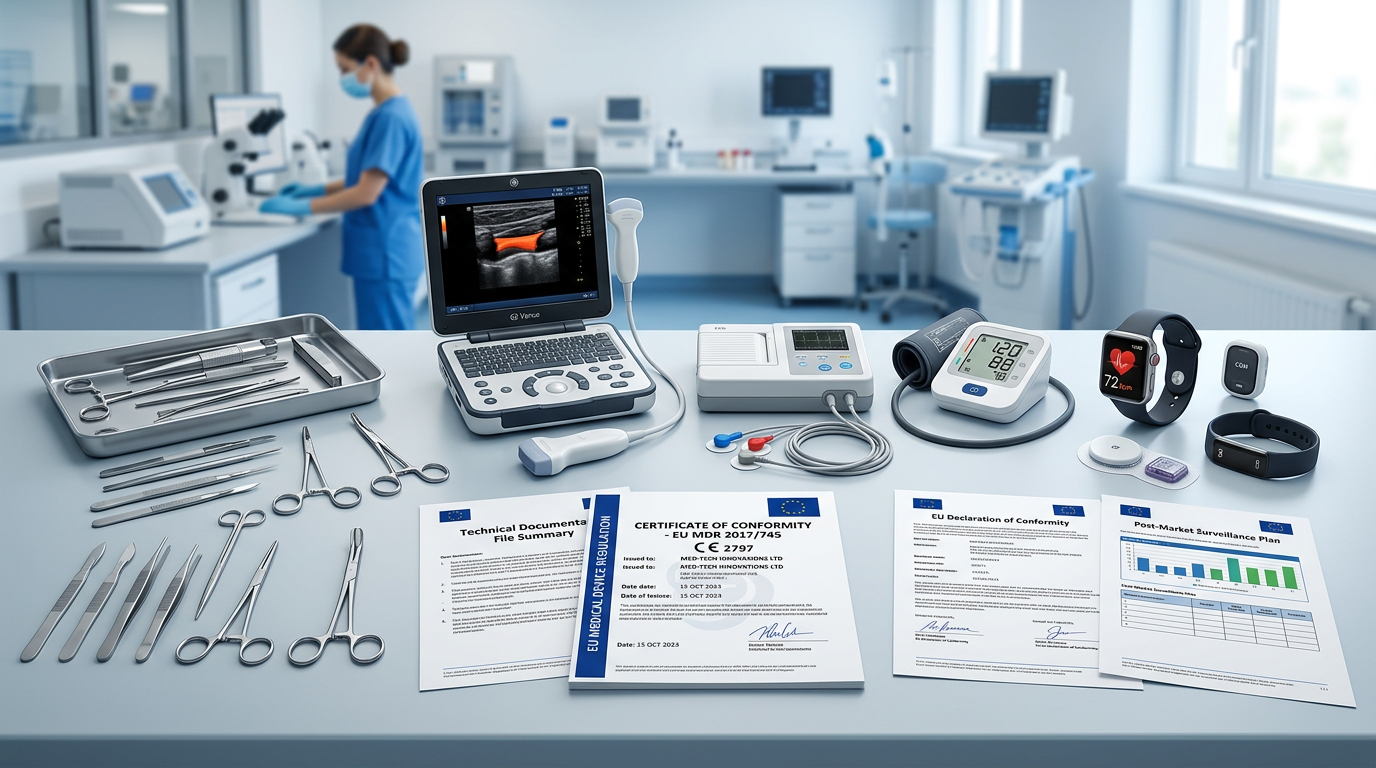
EU MDR Consulting: Medical Device Regulatory Requirements Explained
EU Medical Device Regulation (EU) 2017/745 replaced MDD in 2021. What manufacturers need to know about MDR compliance, Notified Bodies, and the transition timeline.

EU Novel Food Regulation: Which Supplement Ingredients Are Affected?
EU Novel Food Regulation (EU) 2015/2283 applies to supplement ingredients not consumed in the EU before May 1997. Which ingredients need authorisation and how to get it.
EU Responsible Person for Cosmetics: Full Legal Obligations
What is an EU Responsible Person for cosmetics? What are their legal obligations under Regulation 1223/2009? Who needs one and how to appoint them correctly.

EU Supplement Labeling Requirements: Vitamins, Minerals & Botanicals
What must appear on EU food supplement labels? Requirements under Directive 2002/46/EC and Regulation (EU) 1169/2011, including NRVs, warnings, and botanical-specific rules.

Exporting Supplements from USA to EU: Complete Compliance Guide
How to export dietary supplements from the USA to the EU. Regulatory requirements, ingredient compliance, labeling, CPNP notification, and market entry strategy.

FDA 21 CFR Part 111: GMP Requirements for Dietary Supplement Manufacturers
21 CFR Part 111 sets GMP requirements for dietary supplement manufacturers in the USA. What it requires, how FDA enforces it, and how it compares to EU GMP standards.

GMP Audit Preparation: What EU Inspectors Look For
How to prepare for a GMP audit by EU regulatory inspectors. What ANSM, EMA, and national authority inspectors examine, common findings, and how to avoid them.

How to Find and Verify an ISO 17025 Accredited Laboratory
How to find ISO 17025 accredited laboratories, verify their accreditation scope, and avoid common mistakes when selecting a contract testing laboratory for regulatory submissions.

ISO 17025 Accreditation: Complete Guide for Testing Laboratories
Everything testing laboratories need to know about ISO/IEC 17025 accreditation — requirements, process, costs, accreditation bodies, and how Care Europe can help.
ISO 17025 Accreditation: Complete Guide for Testing Laboratories
Learn what ISO 17025 accreditation requires, how the assessment process works step by step, and how to choose between COFRAC, UKAS, A2LA, and DAkkS.

ISO 17025 Certification: Cost, Timeline & Step-by-Step Process
How much does ISO 17025 accreditation cost? How long does it take? A practical breakdown of costs, timelines, and the step-by-step process for testing laboratories.

ISO 22716 GMP for Cosmetics: What Every Manufacturer Must Know
ISO 22716 is the international GMP standard for cosmetic manufacturers. Learn what it requires, how it differs from EU GMP, and how to implement it for regulatory compliance.

Marketing Authorisation in Europe: Centralised vs Decentralised Procedure
How to get a marketing authorisation in the EU. Comparing the centralised procedure (EMA) vs decentralised and mutual recognition procedures. Timelines, costs, and strategy.

Nutraceutical Regulatory Consulting: EU Market Entry for Functional Foods
Nutraceuticals and functional foods face complex EU regulatory requirements. How regulatory consulting helps brands navigate the food-medicine borderline and enter the EU market.

Pharma Compliance Consulting: FDA vs EMA — Key Differences
FDA and EMA regulate pharmaceuticals differently. Key differences in GMP, clinical trial requirements, approval procedures, and post-market obligations that affect compliance strategy.

Pharmaceutical Regulatory Consulting: When You Need It and What It Costs
What does pharmaceutical regulatory consulting involve? When do you need a consultant vs. in-house expertise? Costs, scope, and how to select the right partner in Europe.

REACH Compliance for Cosmetic Manufacturers: The Annex XVII Checklist
How REACH Regulation (EC) No 1907/2006 applies to cosmetic manufacturers. Annex XVII restrictions, SVHCs, and what EU and non-EU brands must do to comply.
Cosmetic Product Safety Report (CPSR) — What It Is and Who Needs One
A detailed guide to the Cosmetic Product Safety Report (CPSR) required under Regulation (EC) No 1223/2009 — what Parts A and B must contain, who can sign it, and how to commission one for your EU cosmetics launch.
The CPNP Portal — How to Notify a Cosmetic Product in the EU
A step-by-step guide to the Cosmetic Products Notification Portal (CPNP) — what information is required, common submission errors, and how to manage notifications for a multi-product portfolio.

EU Cosmetics Regulation 1223/2009 — A Plain-Language Guide for Manufacturers
A practical breakdown of Regulation (EC) No 1223/2009 for cosmetic manufacturers entering the EU market — covering product safety, responsible persons, CPNP notifications, and labeling obligations.
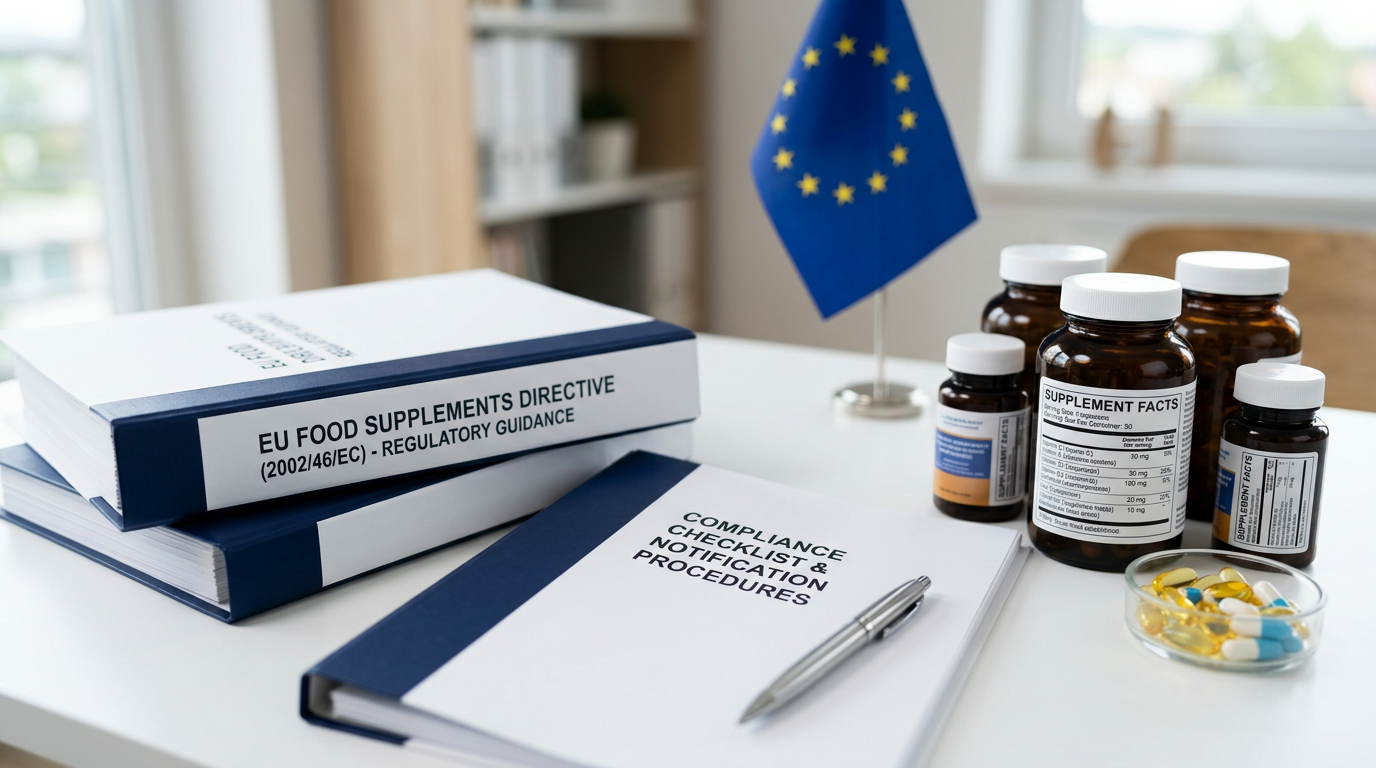
EU Food Supplements Directive 2002/46/EC — What North American Brands Must Know
A practical guide to Directive 2002/46/EC governing food supplements in the EU — covering permitted vitamins and minerals, maximum levels, labeling obligations, and what North American brands must do differently.
EU Labeling Requirements for Dietary Supplements — What Must Appear on the Label
A practical guide to EU dietary supplement labeling requirements under Directive 2002/46/EC and Regulation (EU) No 1169/2011 — covering mandatory declarations, health claim rules, language requirements, and common labeling errors.
EU vs. FDA Cosmetic Regulations — Key Differences That Affect Product Strategy
A side-by-side comparison of EU Regulation (EC) No 1223/2009 and FDA cosmetics rules — covering prohibited substances, safety assessments, labeling, and what these differences mean for global product strategy.
The EU Market Entry Roadmap for Supplement Brands — Step by Step
A step-by-step EU market entry roadmap for supplement brands — covering regulatory classification, ingredient compliance, labeling, notification, distribution, and post-market obligations under EU food law.
EU Novel Food Regulation — When It Applies to Your Supplement Ingredients
A practical guide to Regulation (EU) 2015/2283 on novel foods — how to determine if a supplement ingredient triggers novel food status, what the authorisation process involves, and how to check the EU Novel Food Catalogue.
REACH Compliance for Cosmetic Ingredients — The Annex XVII Restrictions Explained
How REACH Regulation (EC) No 1907/2006 and its Annex XVII restrictions affect cosmetic ingredient sourcing and formulation for EU market entry — with practical guidance for compliance teams.
Responsible Person Under EU Cosmetics Regulation — What to Look for and What to Avoid
A practical guide to selecting a Responsible Person under Regulation (EC) No 1223/2009 — what the role requires, what questions to ask a prospective RP, and the red flags that signal inadequate service.